
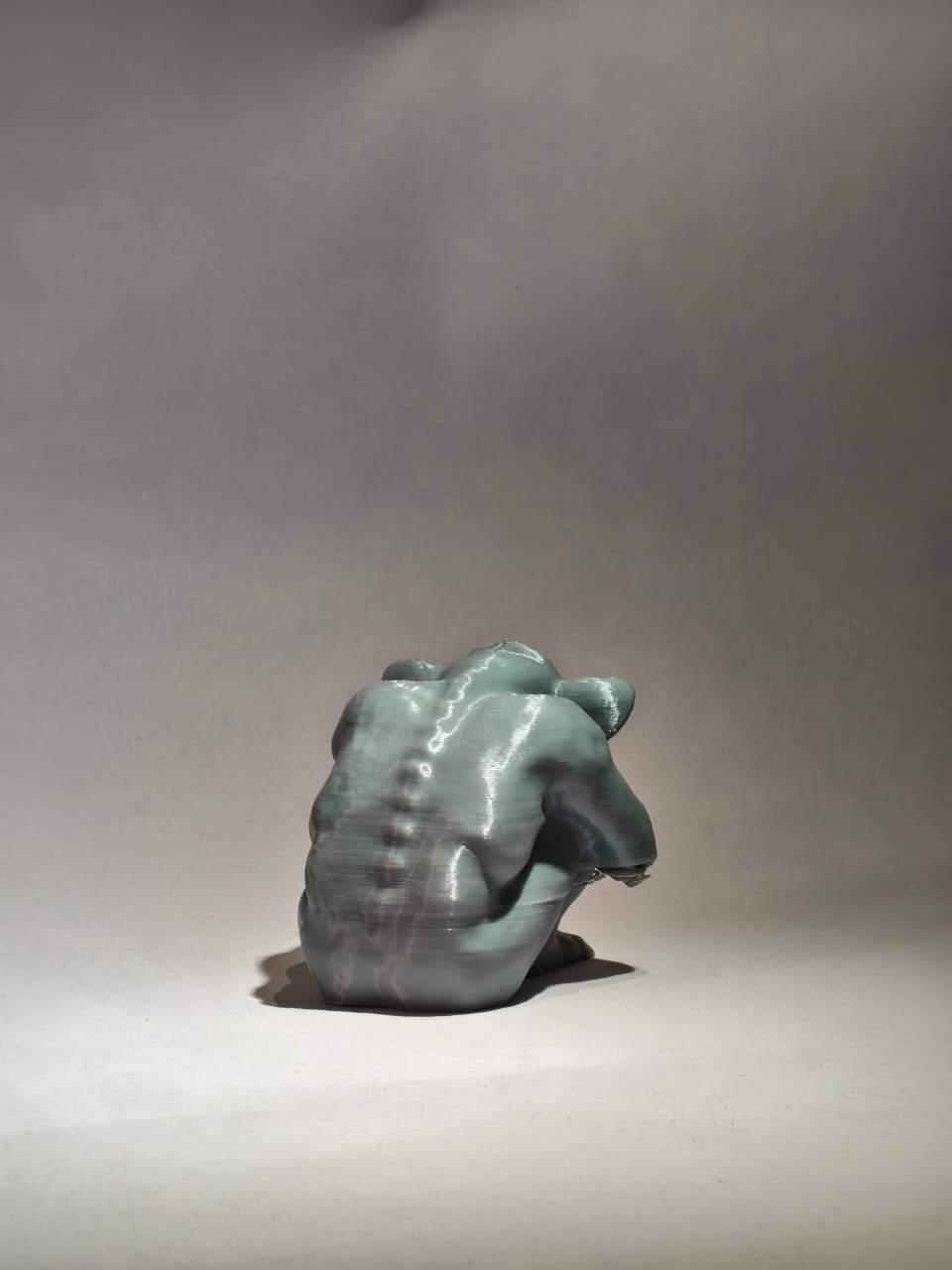
The Sad Red Gargoyle — The Protector Who Was Never Protected
The gargoyle was put on the cathedral to protect everyone inside it and that was the agreement — carved from stone, positioned at the edge of everything, exposed to every storm, every century, every weight of sky that passed overhead, standing guard over the warmth and light and community happening in the building behind it while it remained permanently outside of it, permanently at the edge, permanently in the weather, permanently doing the job it was placed to do without anyone ever asking whether the job was also doing something to it in return.
The gargoyle never got to go inside. It protected the congregation from the darkness and nobody ever thought to ask what the darkness was doing to the gargoyle — what seven centuries of exposure, of storms absorbed, of evil deflected, of standing at the outermost edge of everything warm and communal and protected does to the creature assigned to make all of that warmth and community and protection possible for everyone except itself.
The red is not anger. The red is not aggression. The red is the color of a wound that has been open long enough to become part of the architecture — the specific, permanent, structural red of something that hurts not from a single blow but from decades of weather and exposure and being the thing between everyone else and the storm without anyone ever thinking to build something between the storm and the gargoyle.
This is the biography of every person who built their entire identity around being strong for others — the caretaker who never received care, the parent who held everyone together while quietly dissolving from the inside, the friend who was always the one you called at 2am and who never called anyone because calling felt like a betrayal of the role they had accepted so completely and so early that they could no longer remember a version of themselves that existed before the role did.
One billion people globally live with a mental health condition and most of them are standing exactly where the gargoyle stands — at the edge of something, in the rain, absorbing what the people inside cannot face, making sure everyone behind them is okay, performing the structural function of protection so consistently and so invisibly that the people being protected have stopped registering the protection as something that costs the protector anything at all.
The sadness in the gargoyle's face is not decorative. It was not carved there for aesthetic effect by a medieval craftsman with a taste for the dramatic. It is the accumulated, geological, centuries-deep sadness of a creature that was given purpose without being given care, that was assigned a role without being asked if the role was survivable, that was placed at the edge of everything that mattered and left there with the specific understanding that its value was entirely conditional on its continued willingness to stay at the edge and never come inside.
The world has one billion gargoyles. They are sitting in offices and kitchens and hospital wards and classrooms doing the work that holds everything together, absorbing the weather that would otherwise reach the people they love, wearing the red of a wound that has never been properly treated because treating it would require someone to notice it and noticing it would require someone to look directly at the gargoyle rather than through it toward the building it was placed to protect.
Nobody is checking on the gargoyle. Nobody has ever checked on the gargoyle. And the gargoyle stays anyway — red, sad, exposed, faithful to a purpose that was never faithful to it — because the alternative is stepping away from the edge and letting the storm reach the people inside and that is the one thing the gargoyle was made too well to ever be able to do.